
Aug 8, 2026Technical Blog & Machining Tips
What Is the True Cost of a Vortex Carbide End Mill?
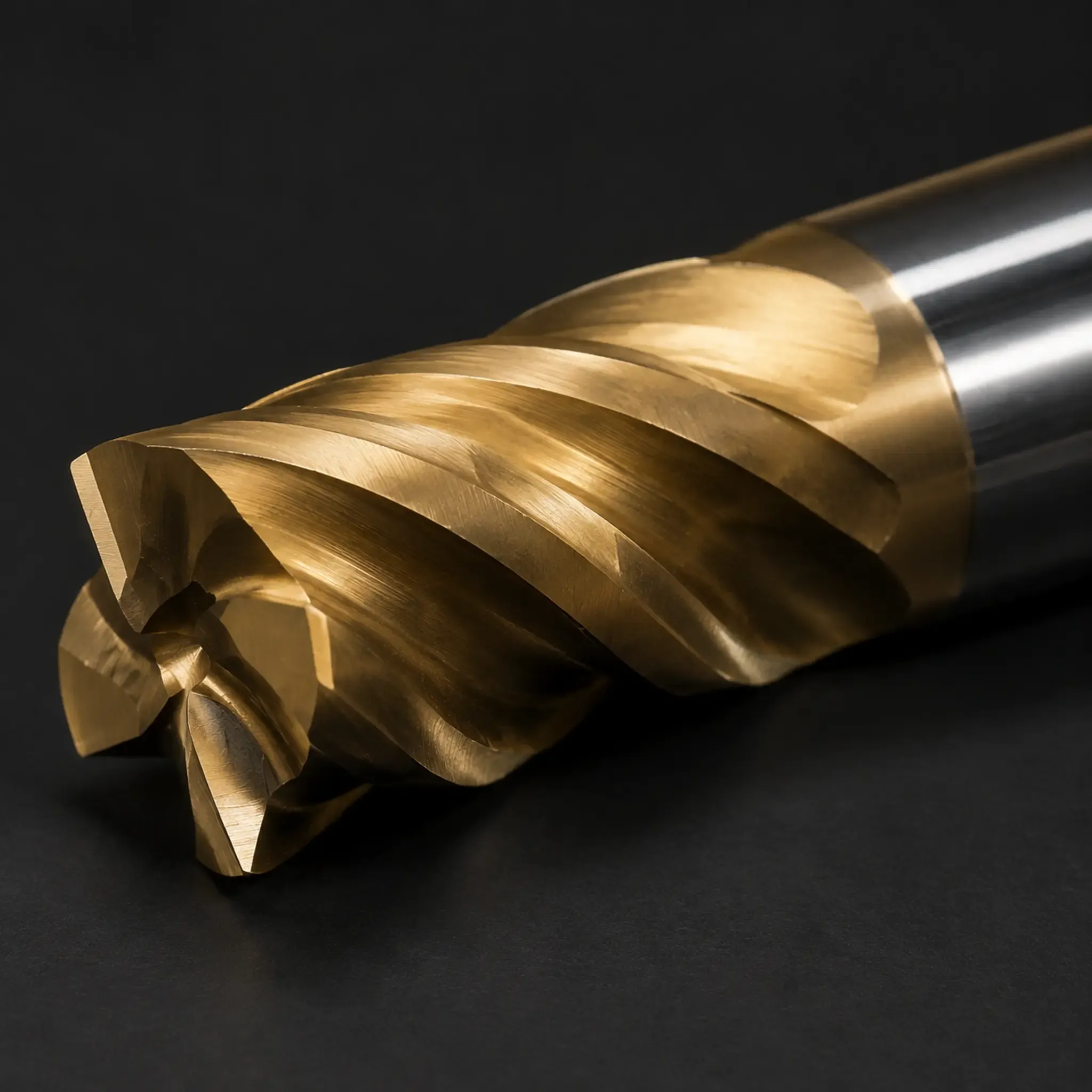
Struggling to reduce production costs, many shop owners instinctively look for cheaper tooling. You see the price tag on a premium tool and hesitate, but focusing only on that initial expense can hide much larger costs in slow cycle times and frequent tool changes.[1] Evaluating the true cost of a Vortex carbide end mill requires a shift in perspective, one that can significantly improve your shop's bottom line.
The true cost of a Vortex carbide end mill is not its purchase price, but its impact on your total cost-per-part.[2] By dramatically reducing machine cycle times and extending tool life, these premium tools often result in a lower overall cost for each finished component, directly boosting your profitability and shop capacity.
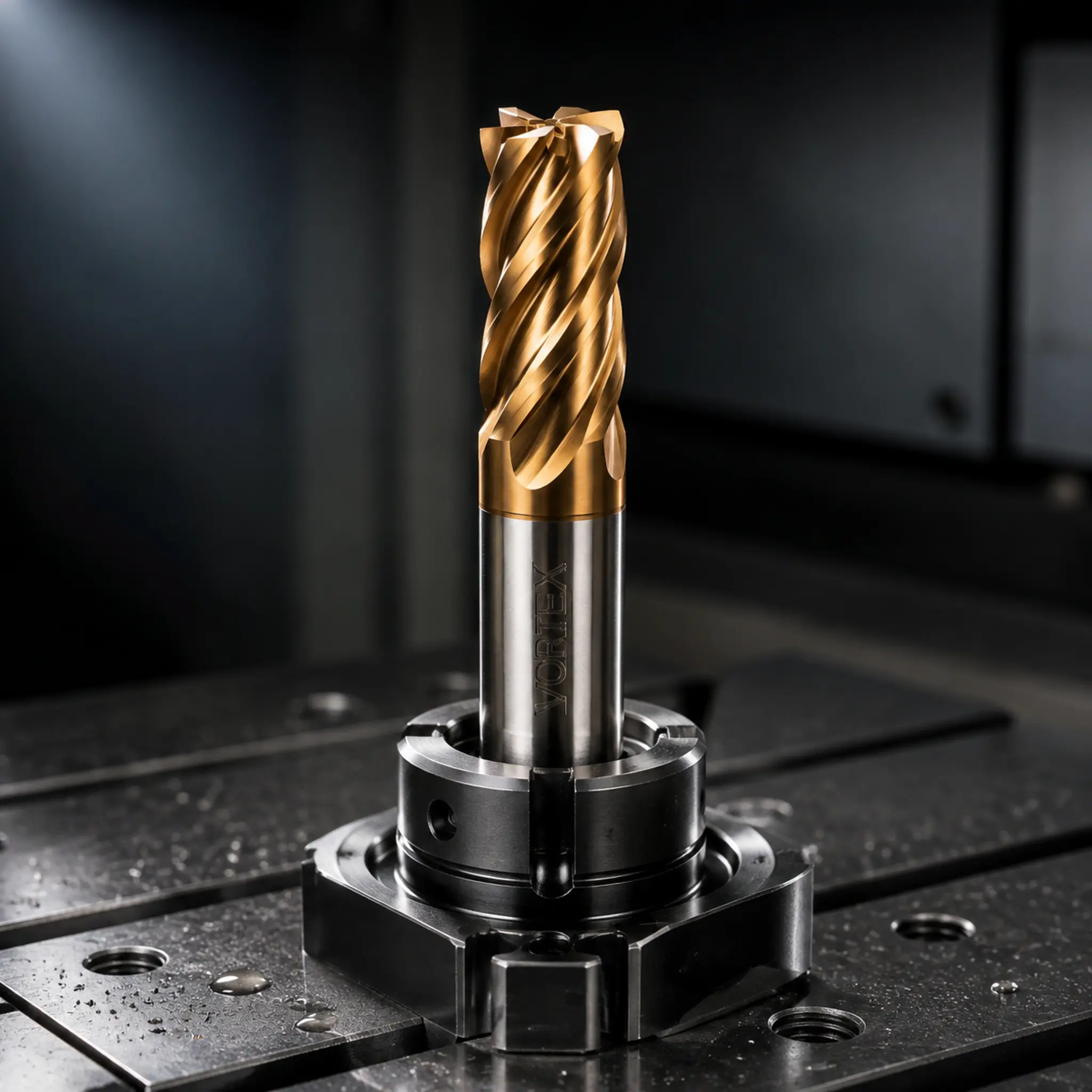
This might sound counterintuitive. How can a more expensive tool save you money? To understand, we need to move beyond the purchasing department's spreadsheet and look at the complete manufacturing equation. Let's break down the math that successful, high-output shops use every day.
Why Does a Vortex Carbide End Mill Seem So Expensive?
You see the invoice for a premium end mill and immediately question if the price is justified. Compared to a standard, general-purpose tool, the upfront cost can be double or more, making it feel like an unnecessary luxury. But what are you really paying for when you invest in a Vortex carbide end mill?
The higher price reflects advanced material grades, proprietary geometric designs, and specialized coatings. These features are not just marketing points; they are engineered for higher performance, which translates directly to a lower cost-per-part by enabling aggressive, reliable machining.
Dive Deeper: The Anatomy of Value
The most common pushback I hear from new clients is about the initial price. My response is always the same: let's talk about what goes into that tool and how it impacts your machine's hourly rate. The price isn't arbitrary; it's a direct reflection of the technology and precision required to manufacture a tool that can outperform standard options by a wide margin.
H3: Beyond the Carbide Itself
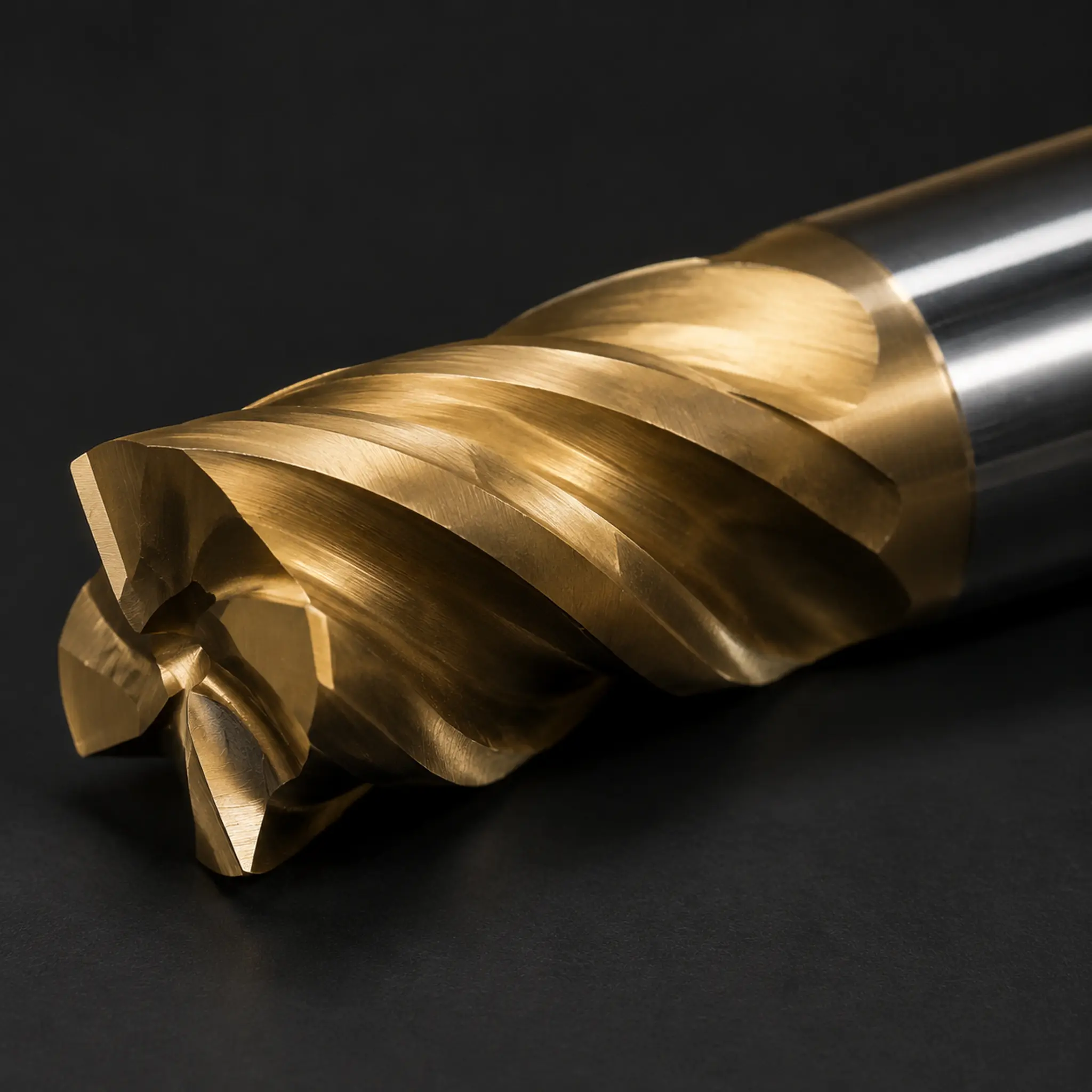
Saying a tool is made of "carbide" is like saying a car is made of "metal." The specifics matter. A Vortex carbide end mill begins with a sub-micron or nano-grain grade of tungsten carbide. This raw material is more expensive but provides superior hardness, wear resistance, and toughness.[3] The manufacturing process itself is also far more advanced. We use state-of-the-art CNC grinding machines that can hold tolerances within microns to create complex geometries.[4] This level of precision is essential for the tool to perform consistently at high speeds and feeds. That R&D and capital equipment investment is factored into the final cost.
H3: The Geometry of Profitability
This is where the magic really happens. A standard end mill might have a simple 30° helix. A Vortex carbide end mill, however, often features a variable helix and an asymmetrical flute design.
- Variable Helix: This design changes the angle of the cutting edge along its length. It disrupts the harmonic vibrations that cause chatter[5], especially in deep cuts or when machining tough materials. Less chatter means a better surface finish and allows you to run the machine much faster without risking tool failure.
- Asymmetrical Flutes: By varying the spacing between the flutes, the tool creates an irregular cutting rhythm. This again breaks up harmful harmonics[6], enabling deeper axial cuts and higher feed rates.
The business outcome is simple: this unique geometry allows for significantly higher Metal Removal Rates (MRR).[7] You can run the machine faster and take more aggressive cuts, which directly reduces the cycle time for every single part you produce.
H3: Advanced Coatings for Longevity
Finally, a premium tool is finished with a multi-layer PVD coating like AlTiN (Aluminum Titanium Nitride) or a proprietary variant. These coatings create a thermal barrier, protecting the carbide substrate from the intense heat generated at the cutting zone.[8] This has two major benefits:
- Longer Tool Life: The tool simply lasts longer before it wears out.
When you buy a Vortex carbide end mill, you are not just buying a piece of carbide. You are investing in the engineering that allows you to reduce machine time, which is almost always the single largest cost on your factory floor.
How Do You Calculate the Real Cost-Per-Part?
Relying on the tool's purchase price to make procurement decisions feels simple, but it’s an incomplete picture that could be costing your shop serious money. You're ignoring the most significant factors in your production cost equation: machine time and output. So, how do you get the full picture?
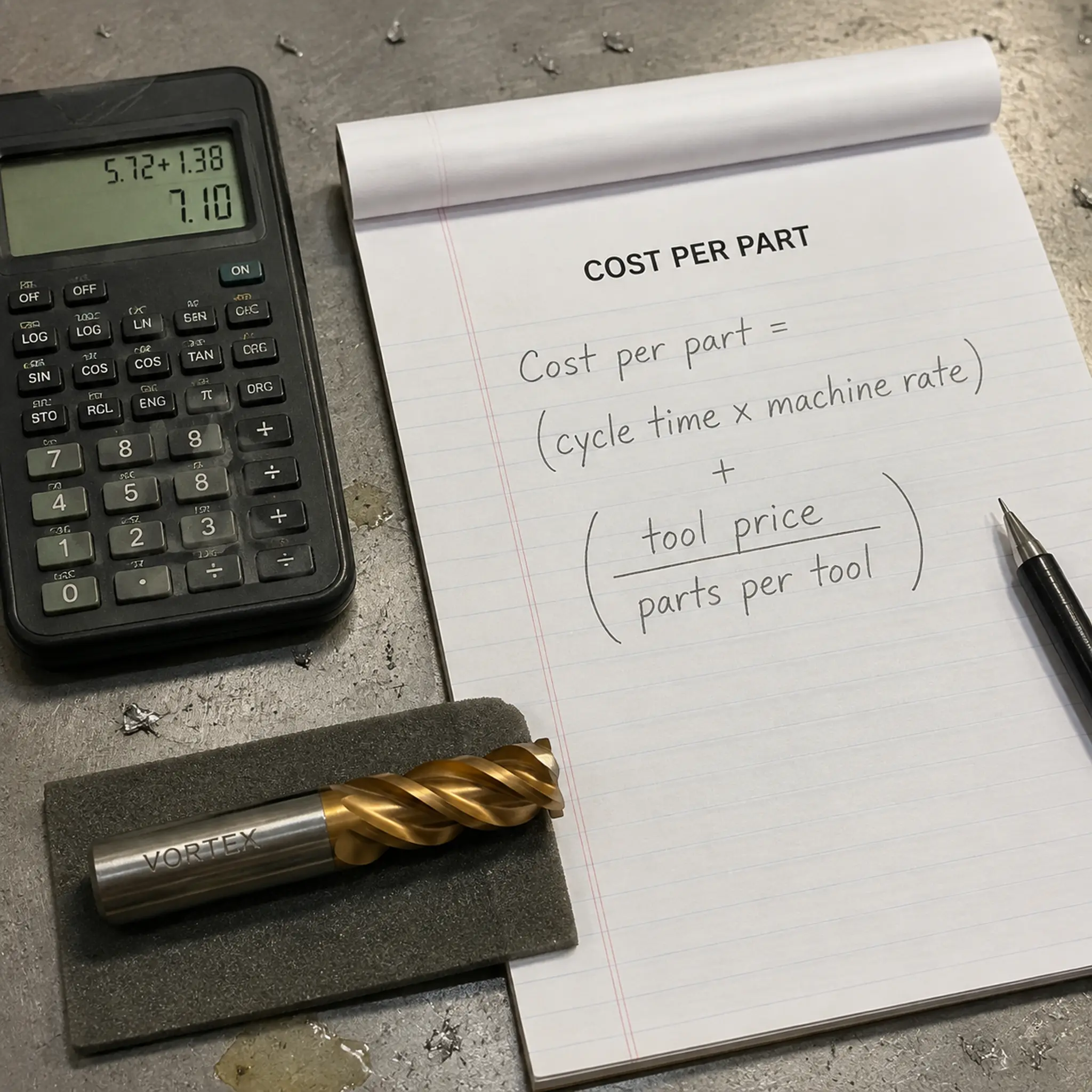
To calculate the real cost-per-part, you must add the machine time cost for one part to the tooling cost attributable to that same part.[10] This simple formula reveals that reducing cycle time, even by a small percentage, almost always creates more savings than finding a slightly cheaper tool.
Dive Deeper: The Math That Matters
When I sit down with production managers, we often build a simple model on a whiteboard. It’s a powerful exercise that shifts the conversation from "tool cost" to "production profitability." The math isn't complex, but it requires you to know your numbers.
H3: The Key Components of Machining Cost
Your total cost to produce one part is a combination of several factors, but two are overwhelmingly dominant:
- Machine Time Cost: This is the most expensive and impactful variable.[11] It's your shop's hourly rate for a given CNC machine, which should account for electricity, maintenance, floor space, and the machine's depreciation. A typical rate might be anywhere from 150 per hour, or even higher for advanced 5-axis machines.
- Tooling Cost Per Part: This is the price of the end mill divided by the number of parts you can successfully machine before it needs to be replaced.
Labor cost is also a factor, but for our purposes, we can often bundle it into the machine's hourly rate. Downtime for tool changes also adds up, but its biggest impact is the opportunity cost of the machine sitting idle.
H3: A Practical Cost-Per-Part Formula
Let's use a simplified but effective formula:
Cost-Per-Part = (Cycle Time in minutes / 60 * Machine Hourly Rate) + (Tool Price / Parts Per Tool)Now, let's apply this formula to a real-world scenario. Imagine you are machining an aluminum block. Your machine rate is **1.50/minute).
Metric | Conventional End Mill | Vortex Carbide End Mill |
|---|---|---|
Tool Price | $40 | $70 (+75%) |
Tool Life (Parts) | 300 parts | 750 parts (+150%) |
Cycle Time | 5 minutes | 3 minutes (-40%) |
Tooling Cost Per Part | | |
Machine Time Cost Per Part | 5 min * | 3 min * |
Total Cost-Per-Part | | |
Total Savings Per Part | - | $3.04 (40% Reduction) |
As you can see, even though the Vortex carbide end mill costs 75% more upfront, it delivers a 40% reduction in the final cost-per-part. The massive savings in machine time completely dwarf the initial price difference. Over a run of thousands of parts, this translates into tens of thousands of dollars in added profit.
Can a Vortex Carbide End Mill Really Lower My Costs?
You've seen the theory and the math, but you're still rightfully skeptical. You need to see proof that this works in a real-world machine shop under pressure, not just on a whiteboard. Can a more expensive tool really deliver a tangible return on investment?
Yes, absolutely. I remember an aerospace client who, after switching to our Vortex carbide end mill series, reduced their cycle time by 30% and doubled their tool life. Despite a 50% higher tool price, their final cost-per-part dropped by 15%, increasing overall shop profitability and freeing up critical machine capacity.
Dive Deeper: An Aerospace Case Study
This story sticks with me because the client was in a tough spot. They were a subcontractor for a major aerospace firm and were struggling with the profitability of a specific job.
H3: The Challenge: High Costs and Bottlenecks
The client was machining a complex structural component from a block of 6061-T6 aluminum. Their existing process used a standard 3-flute carbide end mill. The cycle time for the roughing operation alone was 22 minutes. Because of the aggressive nature of the cut, they were only getting about 100 parts per end mill before wear became an issue, forcing frequent tool changes and creating a production bottleneck at their most capable vertical machining center. The production manager was under immense pressure to increase throughput without sacrificing quality.
H3: The Solution: A Strategic Tooling Consultation
During a visit, I listened to their challenges. The purchasing agent was focused on the high cost of their current tooling consumption, while the production manager was worried about machine capacity. The price of our Vortex series was an immediate objection. "I can't justify paying 50% more per tool," the purchasing agent told me.
Instead of arguing, we proposed a documented test. We would provide a Vortex carbide end mill and help their programmer optimize the toolpaths to take advantage of its high-efficiency milling capabilities. We would track cycle time, tool life, and surface finish, then compare the cost-per-part directly. It's important for buyers to remember that certifications and performance claims are just documents; the real test is a supervised trial on your own machines with your own parts.
H3: The Results: A Clear and Measurable ROI
The results were definitive and validated our approach.
- Tool Cost: The Vortex end mill was indeed 50% more expensive (60).
- Cycle Time: By increasing the feed rate and the depth of cut, we reduced the roughing cycle time from 22 minutes to just over 15 minutes—a 30% reduction.
- Tool Life: The advanced geometry and coating allowed the tool to run cooler and wear more slowly. They were able to machine 200 components before a tool change, doubling their tool life.
Let's plug this into our cost-per-part formula, assuming a machine rate of 2/minute):
- Old Process: (22 min * 60 / 100 parts) =0.60 = $44.60 per part.
- New Process: (15 min * 90 / 200 parts) =0.45 = $30.45 per part.
The switch resulted in a 15% lower cost-per-part on this initial run, saving them over $14 per component. Even more importantly, by freeing up 7 minutes of machine time per part, they effectively increased the capacity of their bottleneck machine by 30%, allowing them to take on more work without buying a new machine.
Frequently Asked Questions
How does a Vortex carbide end mill achieve higher metal removal rates?
It uses a combination of unique flute geometries (like a variable helix) and specialized coatings. This design reduces chatter and vibration, allowing the tool to run at much higher speeds and feeds. This enables you to take deeper, faster cuts, removing more material in less time.
Is a Vortex end mill suitable for all materials?
While they excel in materials like aluminum, titanium, and steels, there isn't a single tool for every job. We offer different Vortex series tools optimized for specific material groups. For instance, a tool designed for aluminum will have different geometry and coating than one designed for hardened steel. Always consult a tooling professional for your specific application.
When does it not make sense to use a premium end mill?
If your machine is not rigid enough to handle high-speed toolpaths, or if you are only doing a one-off prototype part where cycle time is not a critical cost driver, a general-purpose end mill may be more economical. Premium tools deliver ROI when used in production environments where reducing cycle time creates significant value.
What is the typical tool life increase I can expect?
This varies widely based on the material, machine, and programming. However, it's common to see tool life increases of 50% to 200% (double) or more compared to a conventional end mill when parameters are optimized correctly.[12] The key is to leverage the tool's design to its full potential.
Conclusion
The next time you evaluate tooling, I encourage you to look past the sticker price. The most common mistake I see is focusing on the cost of the tool itself, which is often the smallest part of your total production cost. The true cost is revealed when you calculate your cost-per-part. By investing in a premium Vortex carbide end mill, you are buying back your most valuable asset: machine time. The ability to reduce cycle times and extend tool life delivers a powerful return on investment that lowers costs, increases capacity, and ultimately makes your shop more profitable. This is the strategic thinking that separates good shops from great ones.
If you're ready to move beyond sticker price and focus on true profitability, our team at QT Tools is here to help. Contact us to discuss your application and let's run the numbers for your specific job. A qualified professional evaluation can determine if a strategic tooling upgrade is the right move for your shop.
1
"New NIST Tool for Estimating Manufacturing Industry Costs (Beta ...", https://www.nist.gov/news-events/news/2020/01/new-nist-tool-estimating-manufacturing-industry-costs-beta-version. Manufacturing cost-modeling literature treats machine utilization time, tool consumption, and tool-change downtime as distinct contributors to part cost, supporting the view that purchase price alone can understate machining economics; the evidence is contextual and does not evaluate Vortex tools specifically. Evidence role: general_support; source type: paper. Supports: A machining cost model that includes machine utilization time, tooling consumption, and tool-change or downtime costs as contributors to part cost.. Scope note: Contextual support for the cost principle, not direct proof of performance for the named tool.
2
"Machining Cost Estimator: How to Calculate CNC Part Costs", https://www.dfma.com/resources/machining-cost-estimator.asp. Machining economics teaching materials and process-cost models commonly calculate unit cost from machine time, machine rate, tool cost, and tool life, supporting evaluation of cutting tools by cost per part rather than purchase price alone; this is a general manufacturing principle rather than a Vortex-specific result. Evidence role: general_support; source type: education. Supports: Machining economics frameworks calculate unit cost using cycle time, machine rate, tool life, and tool cost rather than purchase price alone.. Scope note: Supports the accounting framework but not the claimed magnitude of savings for any specific branded end mill.
3
"Properties, Advantages, and Prospects of Using Cobalt-Free ...", https://pmc.ncbi.nlm.nih.gov/articles/PMC11722073/. Studies of WC-Co cemented carbides report that reducing tungsten-carbide grain size generally increases hardness and wear resistance, while toughness depends on binder fraction and microstructural control; this supports the material-performance rationale but does not establish the cost or composition of a Vortex tool. Evidence role: mechanism; source type: paper. Supports: Research on cemented carbide microstructure showing that finer WC grain size can increase hardness and wear resistance, with toughness dependent on binder content and microstructure.. Scope note: The toughness claim is conditional because carbide toughness varies with cobalt content, grain size, and processing.
4
"Research Progress on Precision Tool Alignment Technology in Machining", https://pmc.ncbi.nlm.nih.gov/articles/PMC11509547/. Precision-grinding research describes CNC grinding as a process capable of producing complex cutting-tool geometries with micrometer-scale dimensional control, supporting the plausibility of micron-level tool manufacturing tolerances; the cited evidence should be read as general process capability, not verification of a specific shop's equipment. Evidence role: general_support; source type: research. Supports: Technical literature on precision grinding showing that modern CNC grinding systems can produce complex cutting-tool features at micrometer-scale accuracy.. Scope note: Contextual support for CNC grinding capability, not an audit of the manufacturer's stated tolerances.
5
"(PDF) Chatter Vibration Comparison Between Normal Helix Angle and ...", https://www.academia.edu/72392737/Chatter_Vibration_Comparison_Between_Normal_Helix_Angle_and_Variable_Helix_Angle_in_End_Milling_Process_Based_on_Spectrum_Analysis. Milling-dynamics studies have shown that variable-helix cutters can modify regenerative vibration behavior and expand chatter-free stability regions, supporting the stated mechanism of chatter reduction; the evidence concerns variable-helix geometry generally rather than the Vortex design specifically. Evidence role: mechanism; source type: paper. Supports: Peer-reviewed milling dynamics research showing that variable-helix cutter geometry can alter time delays and improve chatter stability.. Scope note: Directly supports the mechanism for variable-helix tools, but not the performance of every implementation.
6
"Chatter Stability of Machining Operations", https://mtrc.utk.edu/wp-content/uploads/sites/45/2020/08/manu_142_11_110801.pdf. Research on variable-pitch milling cutters indicates that unequal tooth spacing changes tooth-passing intervals and can reduce regenerative chatter, supporting the claim that irregular flute spacing disrupts harmful harmonics; this support is for the design principle rather than a named product. Evidence role: mechanism; source type: paper. Supports: Research showing that variable-pitch or unequal-spaced milling cutters can improve stability by changing tooth passing intervals and reducing regenerative chatter.. Scope note: Mechanism-level support; actual results depend on cutter design, setup rigidity, and cutting parameters.
7
"Chatter Stability of Machining Operations", https://academy.cba.mit.edu/classes/computer_machining/chatter.pdf. Machining research links cutter geometry and chatter stability to permissible feed, axial depth, and radial engagement, which in turn determine metal removal rate; this supports the general relationship between advanced geometry and higher MRR but not a guaranteed increase for a specific Vortex cutter. Evidence role: general_support; source type: paper. Supports: Studies showing that cutter geometry affects stability limits and therefore can allow higher feeds, depths of cut, or metal removal rates under suitable conditions.. Scope note: Contextual support because MRR depends on material, machine rigidity, workholding, toolpath, and coolant strategy.
8
"Characterization and Evaluation of Engineered Coating Techniques for ...", https://pmc.ncbi.nlm.nih.gov/articles/PMC9415707/. Studies of AlTiN and related PVD hard coatings report improved high-temperature oxidation resistance, hot hardness, and reduced heat transfer to the carbide substrate, supporting their role as protective coatings in cutting applications; the support is for the coating class, not for an undisclosed proprietary variant. Evidence role: mechanism; source type: paper. Supports: Materials research showing that AlTiN and related PVD hard coatings improve hot hardness, oxidation resistance, and thermal protection of carbide cutting tools.. Scope note: Direct for AlTiN-type coatings generally; proprietary coating performance would require product-specific testing.
9
"PERFORMANCE OF COATED CUTTING TOOLS IN MACHINING", http://conferences.sta.uwi.edu/iconetech2020/documents/RSRevuru-PERFORMANCEOFCOATEDCUTTINGTOOLSINMACHINING.pdf. Comparative machining studies report that PVD-coated carbide tools, including AlTiN-family coatings, can maintain tool life at higher cutting speeds than uncoated carbide in suitable materials; this supports the direction of the claim but not the literal phrase that an uncoated tool would be instantly destroyed. Evidence role: general_support; source type: paper. Supports: Comparative machining studies showing improved tool life or allowable cutting speed for coated carbide tools relative to uncoated tools.. Scope note: Supports higher-speed capability in context, but the article's wording is stronger than most empirical evidence would justify.
10
"An Expert System Approach for Economic Evaluation of Machining ...", https://drum.lib.umd.edu/bitstreams/c50654a1-e645-49ef-b6a8-66652b85f969/download. Manufacturing economics references commonly express machining unit cost as the sum of time-based machine cost and tooling cost allocated over tool life, supporting the simplified cost-per-part formula used here; the formula omits other costs such as inspection, scrap, setup, and overhead unless they are included in the hourly rate. Evidence role: definition; source type: education. Supports: Educational or technical sources defining machining unit cost as a combination of machine time cost and tooling cost allocated over tool life.. Scope note: Supports the simplified formula but not a complete activity-based costing model.
11
"How do you calculate the cost for CNC machining on your CAD models?", https://www.reddit.com/r/AskEngineers/comments/w5zdxn/how_do_you_calculate_the_cost_for_cnc_machining/. CNC machining cost-estimation literature commonly treats machine hourly rate multiplied by cycle time as a principal component of unit cost, supporting the claim that machine time can dominate cost-per-part calculations; the degree of dominance varies by shop rate, labor allocation, and production volume. Evidence role: general_support; source type: paper. Supports: Cost-estimation research identifying machine hourly rate and cycle time as major drivers of CNC machining unit cost.. Scope note: General support only; machine time may not be the largest cost in every operation or accounting system.
12
"Cutting Performance of Different Coated Micro End Mills in ... - PMC", https://pmc.ncbi.nlm.nih.gov/articles/PMC6267563/. Empirical studies of coated and geometry-optimized carbide end mills report substantial tool-life gains under selected materials and cutting conditions, which can contextualize claims of 50% to 200% improvement; however, such ranges are process-specific and should not be treated as a universal expectation. Evidence role: statistic; source type: paper. Supports: Empirical machining studies or reviews reporting tool-life improvements from coatings, geometry optimization, or cutting-parameter optimization compared with conventional carbide tools.. Scope note: Requires studies with comparable tool materials, workpiece material, and cutting parameters; otherwise the range remains only contextual.