
Sep 3, 2026Technical Blog & Machining Tips
How Do You Choose the Right Cemented Carbide End Mill?
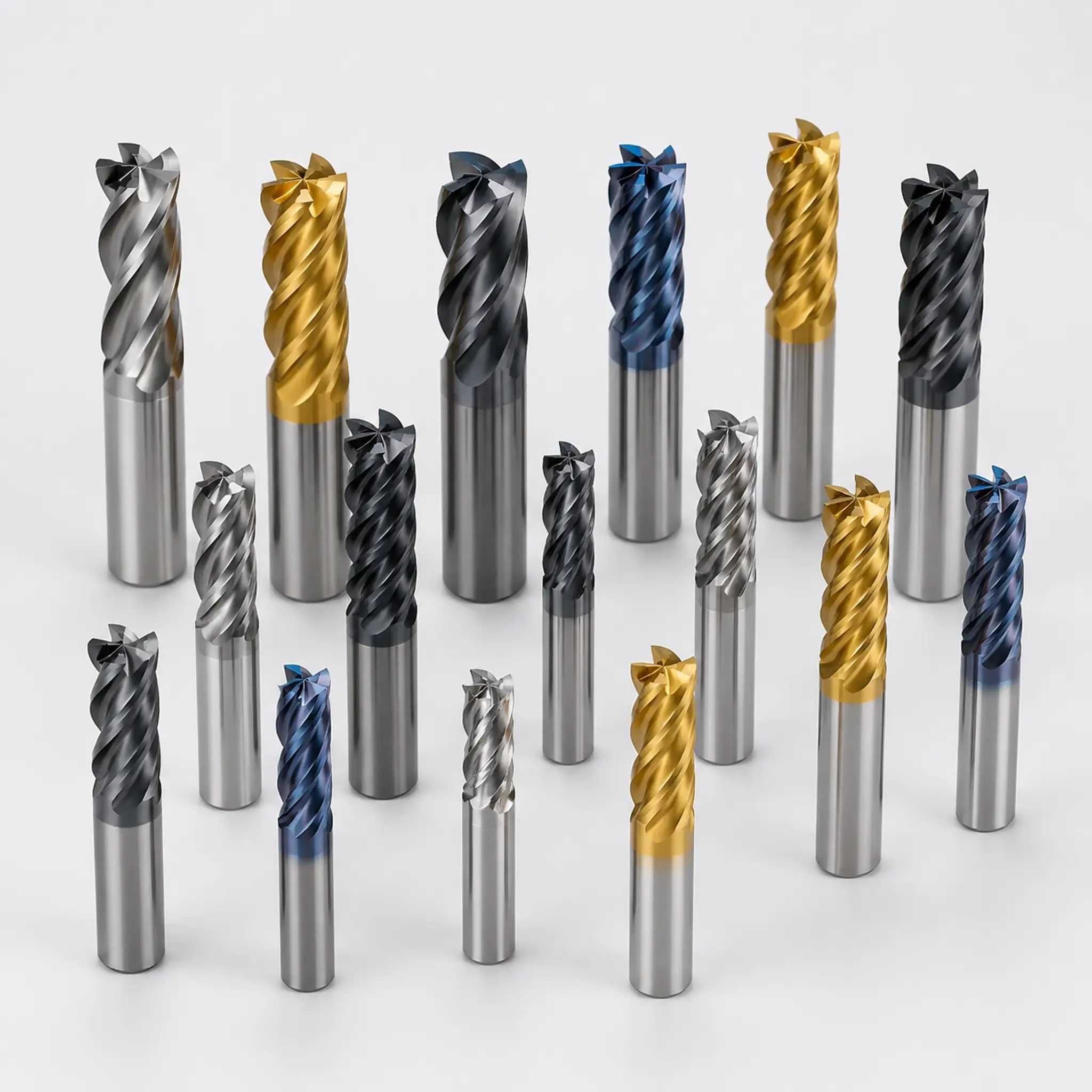
Selecting the right cemented carbide end mill can feel like a high-stakes decision, and in many ways, it is. Choosing incorrectly leads to poor surface finishes, slow cycle times, or worse, scrapped parts and broken tools. You're left wondering if you could have saved money and time by making a different choice, and the pressure to get it right on the next order is immense. The solution isn't finding a single "best" tool, but rather mastering the process of matching the tool's characteristics to your specific machining application.
Choosing the right cemented carbide end mill involves a risk management process that matches the tool's material grade, geometry (like flute count and helix angle), and coating to the specific workpiece material, the type of operation (e.g., roughing or finishing), and your machine's capabilities. The goal is to achieve the lowest total cost per part, not just the lowest initial tool price.[1]
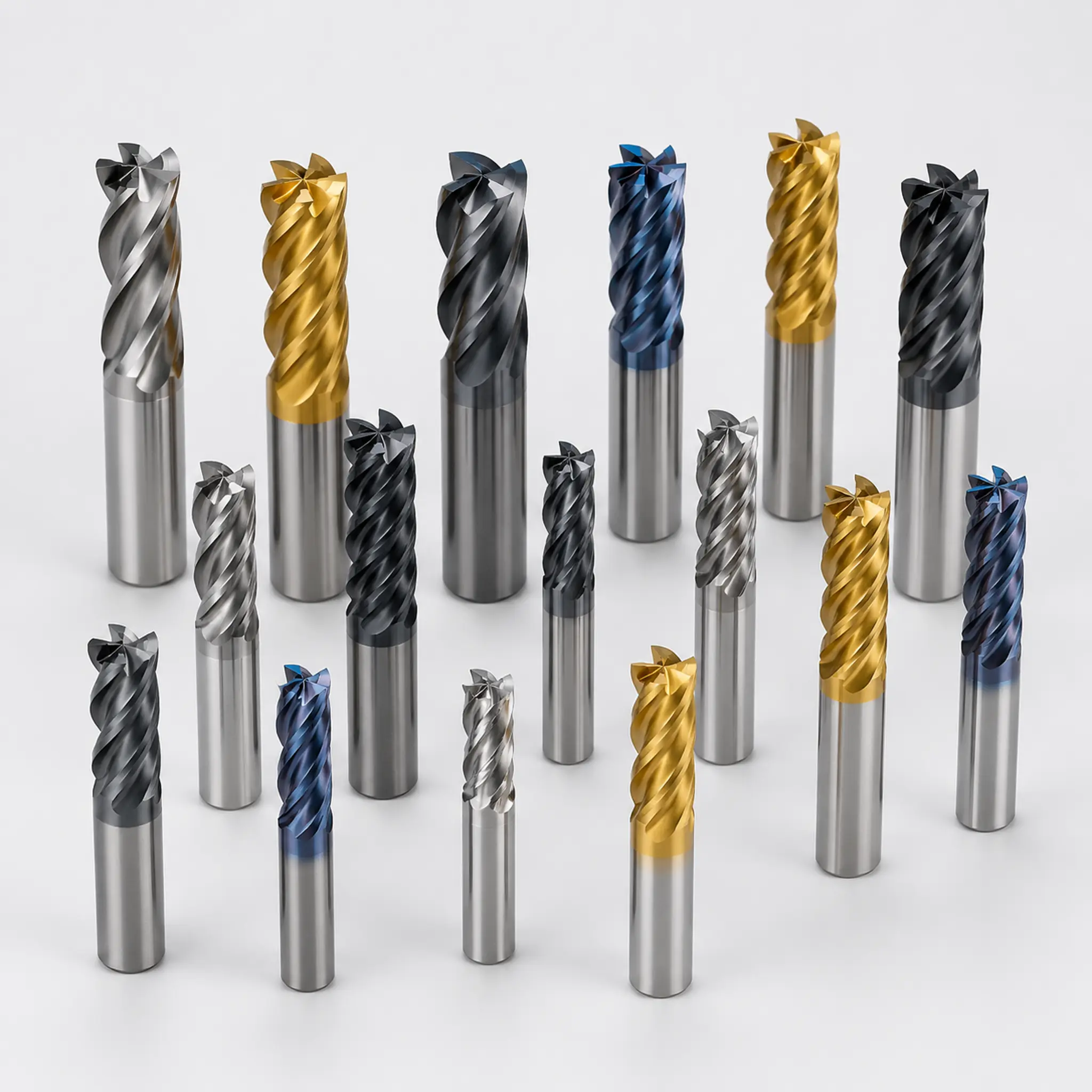
This approach moves you beyond simply looking at a price tag or a single specification. It empowers you to think like a strategist, balancing trade-offs to optimize performance and minimize operational risk. Let's dive deeper into the key factors you should be evaluating.
Why Does the Workpiece Material Matter Most for Your Cemented Carbide End Mill?
You're under pressure to reduce costs, so you find a seemingly good deal on a general-purpose end mill. The problem is that "general-purpose" often means "excels at nothing." Using a tool not designed for your specific material can lead to immediate failure, rapid wear, and poor results, ultimately costing more than the specialized tool would have.
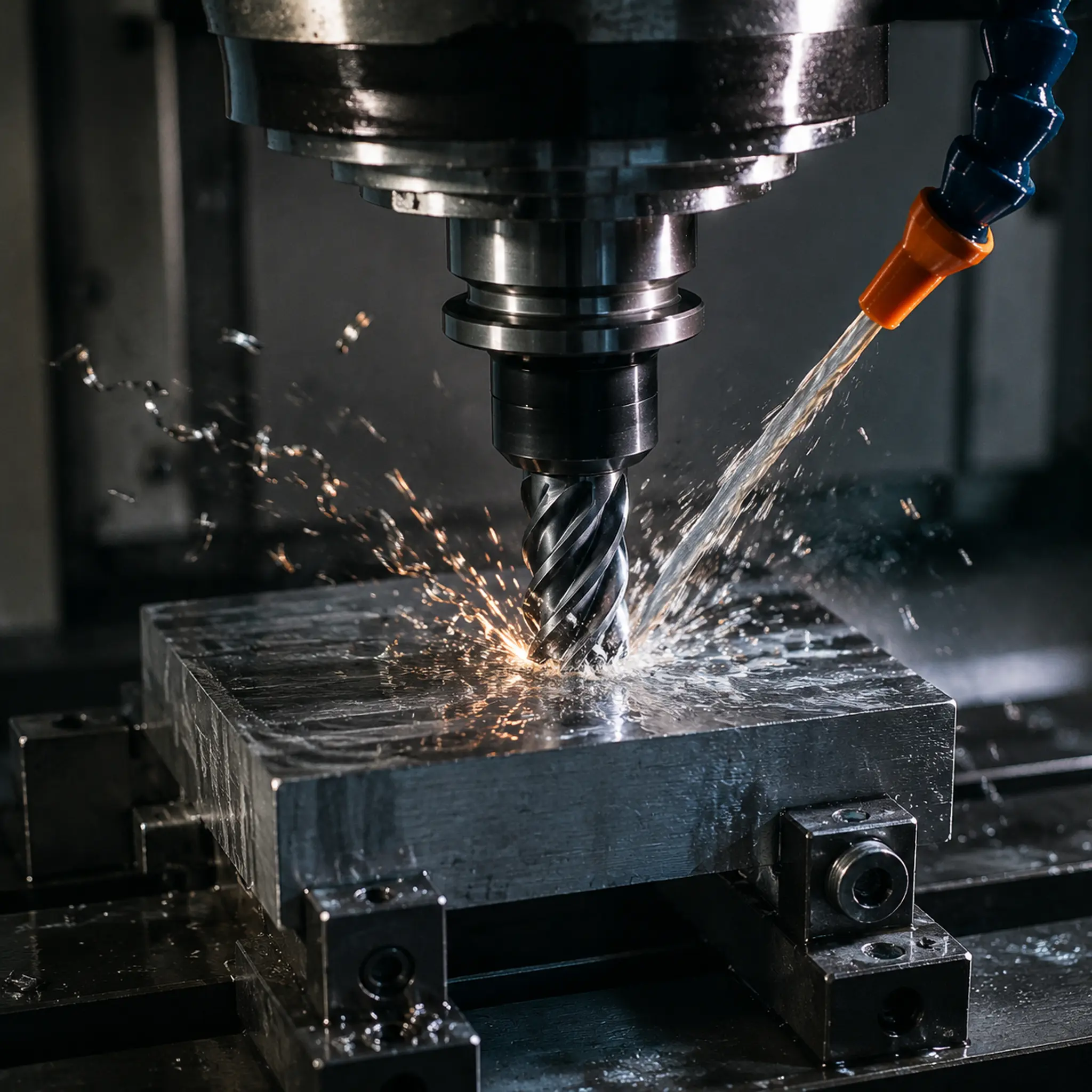
The single most important factor in your selection is the material you are cutting.[2] A cemented carbide end mill designed for aluminum will fail catastrophically in hardened steel, and a tool for titanium will perform poorly in brass. Each material has unique properties that demand specific tool characteristics.
Dive Deeper
In my experience helping customers troubleshoot performance issues, a mismatch between the end mill and workpiece material is the root cause of problems over 80% of the time. Buyers often focus on coating or price, but these are secondary to the fundamental compatibility between the tool's substrate and the material it's intended to cut.
Here’s why it’s so critical:
- Hardness and Abrasiveness: Materials like hardened steels (above 45 HRC), Inconel, and titanium alloys are extremely hard and abrasive[3]. They require an end mill made from a tough, wear-resistant carbide substrate. A standard carbide grade will see its cutting edge dull and chip almost instantly. Conversely, softer materials like aluminum are not abrasive but can be "gummy," requiring different considerations.
- Thermal Conductivity: When you cut metal, you generate immense heat. Some materials, like aluminum, dissipate heat well. Others, like titanium and stainless steel, are poor thermal conductors, meaning the heat concentrates at the cutting edge of the tool.[4] A cemented carbide end mill for these materials needs a specific coating that acts as a thermal barrier (like AlTiN or TiSiN) to protect the carbide substrate from breaking down.
- Chip Formation: The way a material forms a chip dictates the required tool geometry. Soft, ductile materials like aluminum produce long, stringy chips that can clog flutes.[5] This requires highly polished flutes and a sharper cutting edge. Hard, brittle materials like cast iron produce small, powdery chips that are easily evacuated but are highly abrasive.
From a supplier's perspective, when we receive feedback about a tool "failing prematurely," our first question is always: "What material are you cutting, and what were the speeds and feeds?" More often than not, an end mill designed for steel was used on stainless steel without adjusting parameters, leading to predictable failure. This isn't a tool defect; it's an application error.
Material-Specific Tool Selection Guide
Workpiece Material | Key Challenge | Recommended End Mill Characteristics |
|---|---|---|
Aluminum & Alloys | 2-3 flutes, high helix angle (35°-45°), sharp cutting edge, polished flutes. Uncoated or specific DLC/ZrN coating. | |
Mild & Carbon Steels | General wear | 3-4 flutes, 30° helix angle, general-purpose coatings like TiN or TiCN. |
Hardened Steels (>45 HRC) | Extreme heat, abrasion | 4+ flutes, lower helix angle (15°-30°), negative rake angle, heat-resistant coatings like AlTiN or TiSiN. |
Stainless Steels | Work hardening, heat | 4-5 flutes, variable helix to reduce chatter, tough substrate, AlTiN or similar coating. |
Titanium & Superalloys | Poor heat conduction, high tool pressure | 4-7 flutes, specialized geometries for chip control, advanced coatings like AlTiN or proprietary multi-layers. |
Choosing the right cemented carbide end mill starts with the workpiece. Getting this right prevents the most common and costly mistakes we see in the field.
How Do Geometry and Flute Count Impact Performance?
You've found an end mill that's rated for your material, but there are multiple options: 2 flutes, 4 flutes, variable helix, and more. Choosing one at random can lead to chatter, a poor surface finish, or an inability to perform the specific operation you need, like slotting or ramping.
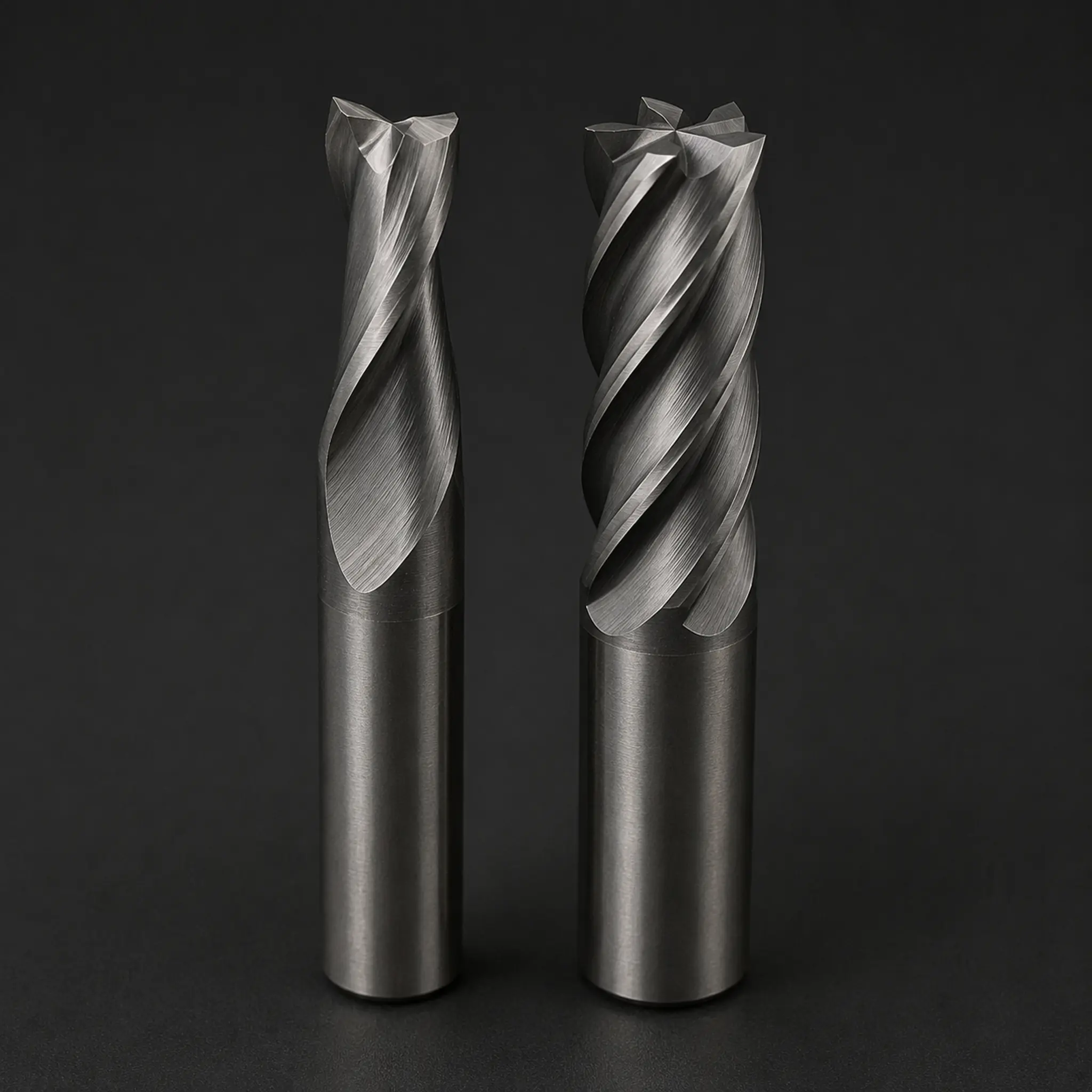
The geometry of a cemented carbide end mill—specifically its flute count, helix angle, and core design—is a series of trade-offs. Each feature is engineered to solve a specific problem, but often at the expense of another capability. Your choice must align with the operation you are performing (e.g., roughing vs. finishing).
Dive Deeper
When new buyers contact us, a frequent question is, "How many flutes do I need?" The answer is always, "It depends on what you're trying to do." There is no single "better" flute count; it's about balancing chip evacuation with material removal rates and surface finish.
Flute Count: The Core Trade-Off
- Fewer Flutes (2-3 Flutes):
- Pros: Large flute valleys provide maximum space for chip evacuation. This is essential for soft, gummy materials like aluminum that produce large chips. It's also the best choice for deep slotting operations where chips can get packed and cause tool breakage.
- More Flutes (4+ Flutes):
- Pros: A higher flute count means a stronger tool core and more cutting edges engaged with the workpiece at any time. This allows for faster feed rates and produces a much finer surface finish, making these tools ideal for finishing passes.
- Cons: The small flute valleys can easily get clogged with chips, especially in soft materials or deep slots. They require careful chip management strategies, like using high-pressure coolant or taking shallower axial passes.
Beyond Flute Count: Other Critical Geometries
While flute count is a major factor, other geometric features are just as important for optimizing your selection of a cemented carbide end mill:
- Helix Angle: This is the angle of the cutting edge relative to the tool's centerline.
- High Helix (35°+): Creates a shearing action that pulls chips up and away from the cutting zone. This results in a better surface finish and is great for finishing operations in steels and aluminum.
- Low Helix (15°-30°): Provides a stronger cutting edge and directs cutting forces more radially. This is better for roughing tough materials and machining hard materials where edge strength is paramount.
- Rake Angle: This determines how aggressively the cutting edge engages the material. Positive rake angles are sharper and cut more freely, ideal for soft materials. Negative rake angles provide a stronger, more robust edge needed for hard or interrupted cuts.
When we analyze a customer's application, we don't just recommend a tool; we diagnose the operation. Are you performing a full-width slotting operation? A 2 or 3-flute tool is likely your safest bet. Are you trying to achieve a mirror finish on a side wall? A 5 or 7-flute finisher is the way to go. It's this level of application-specific thinking that separates a successful machining process from a frustrating one.
When Is an Expensive Coated Cemented Carbide End Mill Worth the Cost?
You see two end mills that look almost identical. One is uncoated and costs significantly less than the other, which has an advanced multi-layer coating. It's tempting to choose the cheaper option to save on initial procurement costs, but this can be a false economy that leads to higher long-term expenses.
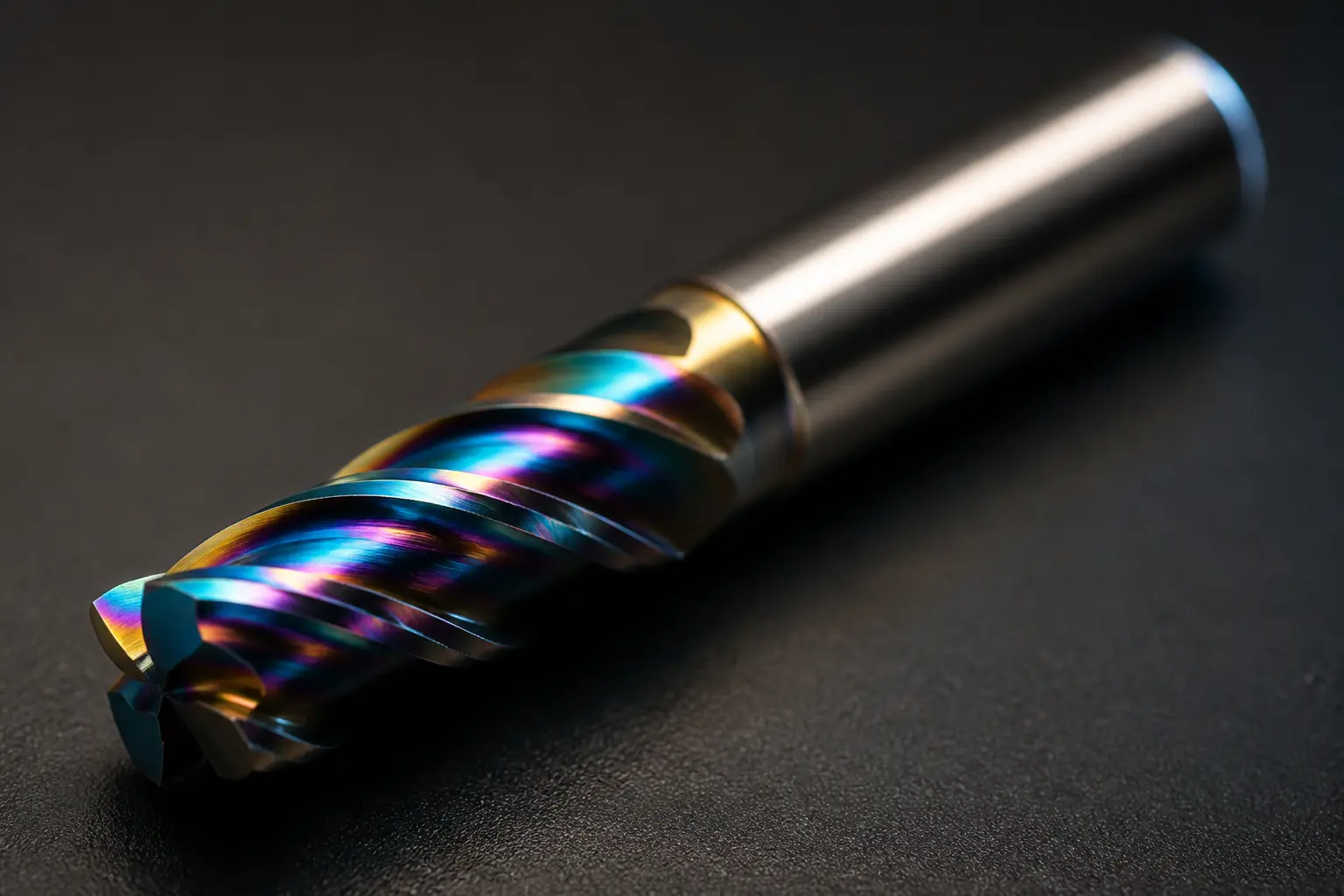
A coated cemented carbide end mill is worth the higher initial cost when the coating's properties—such as increased hardness, lubricity, or thermal resistance—directly combat the primary wear mechanism in your specific application. This extends tool life and allows for higher machining parameters, ultimately reducing the cost-per-part.
Dive Deeper
Thinking of a coating as an "optional extra" is a common purchasing mistake. For many modern applications, the coating is as critical as the carbide itself. In our experience as a supplier, the performance gap between a coated and uncoated tool in a demanding application is not marginal—it can be a factor of 3x, 5x, or even 10x longer tool life.
The decision to invest in a coating is an exercise in risk and reward. The "risk" is the higher upfront cost. The "reward" is a significant reduction in total operational cost through several mechanisms:
- Increased Hardness and Wear Resistance: Coatings like Titanium Nitride (TiN), Titanium Carbonitride (TiCN), and Aluminum Titanium Nitride (AlTiN) are significantly harder than the carbide substrate.[10] This microscopic layer of ceramic protects the cutting edge from the abrasive wear that dulls the tool. For machining abrasive materials like cast iron or steels, a coated tool is almost always more cost-effective.
- Thermal Barrier: This is perhaps the most important function of modern coatings. When machining materials like stainless steel, titanium, or Inconel, the heat generated doesn't dissipate into the chip or workpiece easily. Instead, it flows directly into the tool. Coatings like AlTiN and TiSiN form a thermally insulating layer, keeping the heat out of the carbide substrate and preventing it from softening and failing.[11] Uncoated tools in these materials will fail very quickly from thermal breakdown.
- Reduced Friction (Lubricity): Some coatings, like Diamond-Like Carbon (DLC) or Zirconium Nitride (ZrN), are extremely slick. This property is vital when machining non-ferrous materials like aluminum. The low coefficient of friction prevents the "gummy" aluminum from sticking (welding) to the cutting edge, which is a primary cause of tool failure in these applications.
Matching the Coating to the Application
It's not enough to just choose "a" coating; you need the right one.
Coating | Key Property | Best Application | Why It Works |
|---|---|---|---|
TiN (Titanium Nitride) | General Purpose, Hardness | Mild steels, general machining | The original "gold" coating. A good baseline for non-demanding applications. |
TiCN (Titanium Carbonitride) | High Hardness, Abrasion Resistance | Abrasive materials, cast iron, some steels | Harder than TiN, offers better wear resistance but at lower cutting speeds. |
AlTiN (Aluminum Titanium Nitride) | High-Temp Hardness, Thermal Barrier | Stainless steels, hardened steels, titanium | Forms an aluminum oxide layer at high temps, protecting the tool from heat.[12] The go-to for high-speed machining. |
DLC (Diamond-Like Carbon) | Extreme Lubricity | Aluminum, composites, graphite | Prevents material from sticking to the cutting edge (built-up edge). |
When a customer tells us their tooling budget is tight, we don't just point them to our cheapest cemented carbide end mill. Instead, we ask about their machine time cost, their part rejection rate, and their tool changeover time. Often, a 30% more expensive coated tool that lasts 300% longer and runs 50% faster is the far cheaper option when you calculate the total cost of production.
Frequently Asked Questions
What's the difference between roughing and finishing end mills?
Roughing end mills are designed to remove large amounts of material quickly. They typically have fewer flutes for better chip evacuation and may have serrated cutting edges (corn cob roughers) to break chips into smaller pieces. Finishing end mills have more flutes (4 or more) to produce a smooth surface finish and are used for the final passes on a part.
How do I know when to replace my cemented carbide end mill?
Look for signs of wear like a decline in surface finish quality, an increase in cutting noise or vibration (chatter), or difficulty holding dimensional tolerances. Visually, you may see chipping or rounding on the cutting edge. Many shops use tool life management systems in their CNC controls to replace tools after a set number of parts or runtime.
Can I use the same end mill for steel and aluminum?
It is highly discouraged. An end mill for steel is designed to handle high temperatures and abrasion with a robust cutting edge. An end mill for aluminum needs a very sharp edge and high lubricity to prevent chip welding. Using a steel-specific end mill on aluminum will likely result in a poor finish and material buildup on the tool.
What does the helix angle on an end mill affect?
The helix angle affects chip evacuation, cutting forces, and surface finish. A higher helix angle (e.g., 45°) provides a better shearing action, evacuates chips more effectively, and produces a finer finish, making it ideal for finishing. A lower helix angle (e.g., 30°) provides a stronger cutting edge, making it better for roughing and cutting harder materials.
Conclusion
Successfully selecting a cemented carbide end mill is not about finding a magic bullet, but about conducting a thoughtful risk assessment. By prioritizing the workpiece material, matching the tool's geometry to the operation, and strategically investing in the right coating, you transform a simple purchase into a calculated manufacturing advantage. This approach shifts the focus from the initial tool price to the total cost per part, which is the metric that truly impacts your bottom line. Overlooking these details is the most common and costly mistake we see, but it's also the most preventable.
At QT TOOLS, we have over a decade of experience helping customers navigate these decisions. If you're looking to optimize your machining processes and find the most cost-effective cemented carbide end mill for your unique application, our team is here to provide the responsive, expert guidance you need. Contact us today for a consultation.
1
"An Expert System Framework for Economic Evaluation of ...", https://drum.lib.umd.edu/bitstreams/9647702c-8d4e-41fe-9270-97e46a71abe7/download. A manufacturing-economics source explains that cutting-tool cost must be evaluated together with tool life, machining time, tool-change time, and scrap or quality effects when estimating cost per part. Evidence role: general_support; source type: education. Supports: A neutral source should explain that tooling choices affect machining cost through tool life, cycle time, downtime, and part quality, so the relevant metric is total production cost rather than tool purchase price alone.. Scope note: This supports the cost-accounting principle generally; it may not prove the specific economics of any individual cemented carbide end mill purchase.
2
"On-Machine Measurement Use Cases and Information for ...", https://nvlpubs.nist.gov/nistpubs/ams/nist.ams.400-1.pdf. Machining references commonly identify workpiece material properties as central inputs in cutting-tool selection because they influence tool material, geometry, coating, and operating parameters. Evidence role: expert_consensus; source type: education. Supports: A machining education or handbook source should identify workpiece material properties as a key determinant of cutting tool substrate, coating, geometry, and cutting parameters.. Scope note: The source may describe workpiece material as one of several major factors rather than empirically ranking it as the single most important factor.
3
"Analysis of Tool Wear in Finish Turning of Titanium Alloy Ti ...", https://pmc.ncbi.nlm.nih.gov/articles/PMC11721966/. Research on difficult-to-machine alloys reports that hardened steels, nickel-based superalloys, and titanium alloys impose high mechanical and thermal loads on cutting tools and are associated with accelerated wear mechanisms. Evidence role: general_support; source type: paper. Supports: A peer-reviewed machining source should discuss why hardened steels, nickel-based superalloys, and titanium alloys are treated as difficult-to-machine materials and how they contribute to tool wear.. Scope note: The source may distinguish between hardness, abrasiveness, low thermal conductivity, and chemical reactivity rather than attributing all difficulty equally to hardness and abrasiveness.
4
"A Guide to Machining Difficult-to-Cut Materials: Stainless ...", https://yumoparts.com/en/resources/blog/difficult-to-cut-materials. Machining studies attribute high cutting-zone temperatures in titanium alloys and stainless steels in part to their relatively low thermal conductivity, which limits heat dissipation into the workpiece and chip. Evidence role: mechanism; source type: paper. Supports: A source should support that titanium alloys and many stainless steels have lower thermal conductivity than common steels or aluminum and that this contributes to higher tool-interface temperatures in machining.. Scope note: The exact heat distribution depends on alloy grade, cutting speed, coolant, chip formation, and tool geometry.
5
"How to overcome chip challenges?", https://www.secotools.com/article/how_to_overcome_chip_challenges_?language=en. Studies of aluminum alloy machining describe the tendency of ductile alloys to form continuous chips under certain cutting conditions, making chip evacuation an important consideration in milling operations. Evidence role: mechanism; source type: paper. Supports: A source should explain that ductile aluminum alloys can form continuous or long chips during machining and that chip evacuation is an important design and process concern.. Scope note: Chip shape varies with alloy, cutter geometry, feed, speed, coolant, and chip-breaking features, so the source provides contextual rather than universal support.
6
"How To Prevent Built-Up Edge (BUE) When Machining ...", https://www.sansmachining.com/how-to-prevent-built-up-edge-bue-when-machining-aluminum/. Research on aluminum alloy machining identifies adhesion and built-up edge formation as common wear-related phenomena that can degrade surface finish and interfere with chip flow. Evidence role: mechanism; source type: paper. Supports: A research source should support that aluminum alloys can adhere to the cutting edge, causing built-up edge or chip welding and affecting tool performance.. Scope note: The severity of chip welding depends on alloy composition, tool coating, coolant or lubrication, and cutting parameters.
7
"Why Flute Count Matters - In The Loupe - Machinist Blog", https://www.harveyperformance.com/in-the-loupe/flute-count-matters/. Machining education materials describe flute count as a design compromise: fewer flutes provide larger chip spaces, whereas more flutes generally increase cutter core strength and the number of engaged cutting edges. Evidence role: mechanism; source type: education. Supports: A source should explain how increasing flute count generally reduces flute space while increasing tool core area or rigidity, affecting chip evacuation and strength.. Scope note: Specific cutter designs can modify this trade-off through variable flute spacing, chip breakers, or specialized core geometry.
8
"Why Flute Count Matters - In The Loupe - Machinist Blog", https://www.harveyperformance.com/in-the-loupe/flute-count-matters/. Milling references relate table feed and material removal rate to the number of teeth engaged, feed per tooth, width of cut, and depth of cut, while also noting that flute count affects cutter cross-section and chip space. Evidence role: mechanism; source type: education. Supports: A source should explain the relationship among number of cutting edges, feed per tooth, table feed, chip space, and material removal rate in milling.. Scope note: The claim is condition-dependent because a fewer-flute tool can sometimes achieve high material removal if feed per tooth, chip evacuation, and machine power allow.
9
"Chatter Vibration Comparison Between Normal Helix ...", https://www.academia.edu/72392737/Chatter_Vibration_Comparison_Between_Normal_Helix_Angle_and_Variable_Helix_Angle_in_End_Milling_Process_Based_on_Spectrum_Analysis. Research on variable-pitch and variable-helix milling cutters shows that nonuniform cutting-edge spacing can modify regenerative vibration behavior and improve chatter stability under appropriate cutting conditions. Evidence role: mechanism; source type: paper. Supports: A source should support that variable helix or variable pitch cutter designs can alter tooth passing frequencies and improve chatter stability in milling.. Scope note: The degree of chatter reduction depends on machine-tool dynamics, tool overhang, engagement, spindle speed, and workpiece setup.
10
"Titanium Coatings TiN, TiCN, TiAlN, AlTiN", https://www.hannibalcarbide.com/technical-support/titanium-coatings/. Reviews of hard coatings for cemented carbide cutting tools report that TiN, TiCN, and AlTiN/TiAlN coatings provide high hardness and improved resistance to abrasive and adhesive wear. Evidence role: mechanism; source type: paper. Supports: A source should describe TiN, TiCN, and AlTiN/TiAlN as hard ceramic coatings used to improve wear resistance of cemented carbide cutting tools.. Scope note: Hardness values and performance comparisons vary with deposition method, coating composition, thickness, and substrate grade.
11
"Comparison Study of PVD Coatings: TiN/AlTiN, TiN and ... - PMC", https://pmc.ncbi.nlm.nih.gov/articles/PMC9610208/. Cutting-tool coating literature describes AlTiN/TiAlN and TiSiN-based coatings as thermally stable, oxidation-resistant hard coatings that can reduce heat-related tool degradation in high-temperature machining. Evidence role: mechanism; source type: paper. Supports: A source should support that AlTiN/TiAlN and TiSiN-type coatings are used for high-temperature cutting because of thermal stability, oxidation resistance, and reduced heat transfer to the substrate.. Scope note: The source may support thermal protection and oxidation resistance generally rather than directly measuring heat exclusion for the exact end mill applications discussed.
12
"(PDF) Oxidation post-treatment of hard AlTiN coating for ...", https://www.academia.edu/19791076/Oxidation_post_treatment_of_hard_AlTiN_coating_for_machining_of_hardened_steels. Studies of AlTiN/TiAlN hard coatings report that high-temperature oxidation can produce alumina-rich surface layers, which contribute to oxidation resistance and thermal protection during severe cutting conditions. Evidence role: mechanism; source type: paper. Supports: A source should support that aluminum-containing nitride coatings such as AlTiN/TiAlN can form protective alumina-rich oxide scales at elevated temperatures.. Scope note: The protective effect depends on coating composition, oxidation temperature, atmosphere, and machining conditions.