
Untitled Post
Machining titanium is tough and wears out tools fast. This constant downtime hurts your bottom line, especially when you think you're saving money by choosing a cheaper end mill.
To choose a carbide end mill for titanium, you must match its design to your specific machining task. Consider the substrate, geometry, and a specialized coating. This approach reduces tool changes, minimizes downtime, and ultimately lowers your total cost per part, not just the tool's unit price.
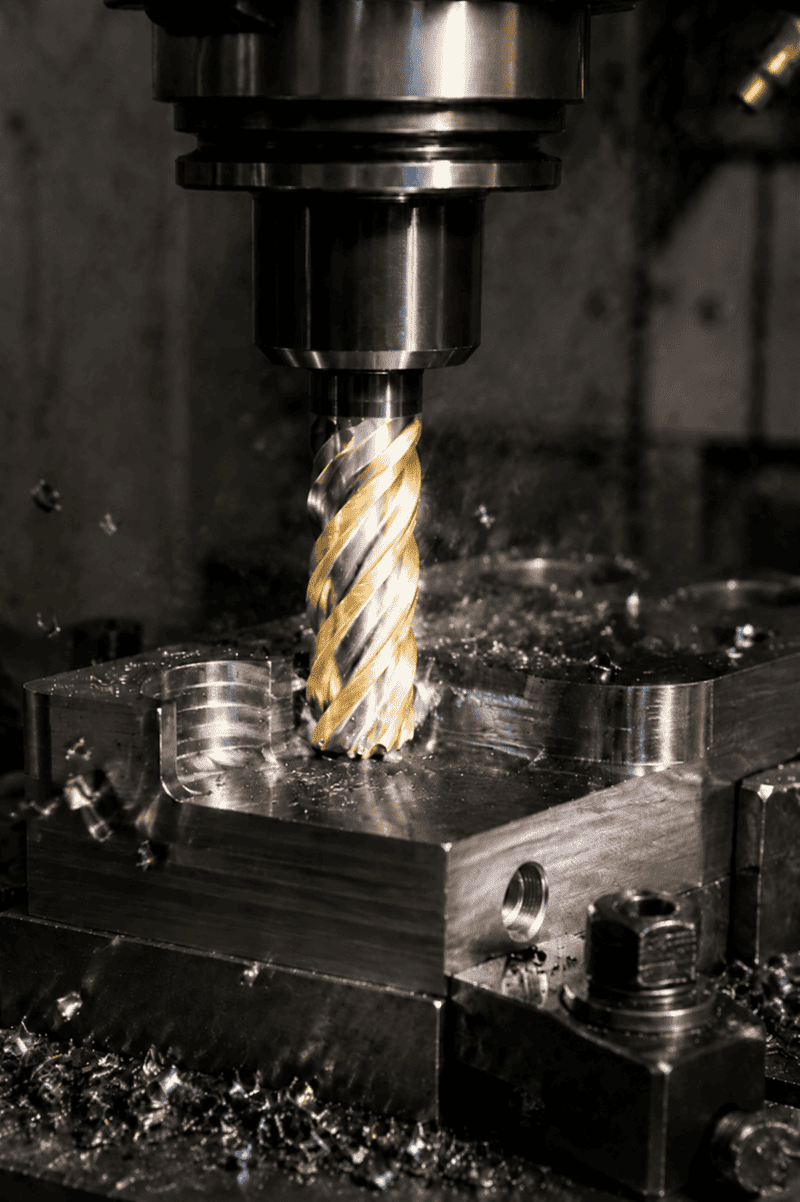
I talk with procurement managers and workshop directors every day. Many of them start the conversation by asking for our price list. I understand why; controlling costs is their job. But I always steer the conversation toward a different metric: the cost per part. A slightly more expensive tool that lasts twice as long and runs more stably is a huge win for any production line. The real cost isn't on the invoice for the tools; it's hidden in machine downtime, scrapped parts, and frequent tool changes. So, let's break down what really matters when you're sourcing end mills for a material as challenging as titanium.
Why Does Tool Design Matter More Than Price for Titanium?
You bought cheaper end mills for titanium, but they keep chipping. Now, your machines are stopped, and operators are constantly changing tools, which kills your production schedule and profits.
A well-designed tool for titanium is built for stability and heat management, not a low price. The right combination of substrate, flute geometry, and edge preparation prevents premature chipping and failure. This reliability directly reduces downtime and lowers your true cost per part.
When I visit workshops, I often see operators struggling with titanium. The material is "gummy," generates extreme heat, and resists being cut. This is where tool design becomes so important. A generic, low-cost end mill simply cannot handle these forces. It’s not about one single feature, but how several elements work together as a system.
It's a System, Not a Single Feature
First, we start with the foundation: the carbide itself. We use high-quality tungsten carbide bars with a 0.6μm grain size. This gives the tool an excellent balance of hardness to resist wear and toughness to prevent it from fracturing under pressure. Next, the geometry is designed to manage heat and chips. A stronger edge preparation, where the cutting edge is slightly honed, is much better for titanium than a razor-sharp edge that can easily chip. Finally, the helix angle and flute shape are engineered to evacuate chips efficiently, preventing them from welding to the tool. It's this complete system that delivers performance.
Machining Task | Recommended Flute Count | Edge Preparation | Key Goal |
|---|---|---|---|
Roughing/Slotting | 2-4 Flutes | Strong/Honed | Maximum material removal rate |
Side Milling | 4-5 Flutes | Balanced | Good surface and stable cut |
Finishing | 5+ Flutes | Sharp/Polished | Excellent surface finish |
How Do You Match the End Mill to the Specific Titanium Machining Job?
You are using a general-purpose end mill for every titanium task. This leads to poor surface finishes, broken tools, and expensive scrapped parts, hurting overall workshop efficiency.
Match the tool by analyzing your operation. Use a low flute count end mill for deep slotting to clear chips effectively. For smooth surfaces, use a high flute count tool with a specific finishing geometry. Using the right tool for the job prevents failure.
A conversation I have almost every week helps illustrate this point. A procurement manager called me, frustrated because his team was breaking end mills while roughing a large block of Ti-6Al-4V. He was using a standard 4-flute finishing end mill for a heavy-duty job. The tool was not designed for that kind of stress. We sent him a 3-flute roughing end mill with a stronger core and a specialized coating. His tool breakage problem disappeared, and his material removal rates went up.
A Tool for Every Task
This is why one size never fits all with titanium. Each operation presents unique challenges.
- Slotting and Roughing: The main goal here is to remove a lot of material quickly. The biggest challenge is chip evacuation. Heat builds up fast in a deep slot. For this, you need a tool with fewer flutes (2-4) and deep gullets to get the chips out. The tool must have a very strong core and a honed edge to absorb the heavy cutting forces without breaking.
- Side Milling and Profiling: Here, stability is everything. You want a smooth cut without chatter or vibration, which can destroy the tool and the part. A 4 or 5-flute end mill with a variable helix design is perfect for this. The irregular spacing between the flutes breaks up harmonic vibrations, leading to a much quieter, smoother cut and longer tool life.
- Finishing: The goal is a beautiful surface finish. For this, you need a tool with more flutes (5 or more). This allows you to run at higher feed rates while taking a very light cut. The cutting edges should be sharp and the flutes polished. A smooth coating like our NF3 is critical here to prevent tiny chips from sticking to the tool and marring the surface of the part.
How Do You Move From a Good Sample to a Reliable Bulk Supply?
You tested a great sample end mill, and the performance was impressive. But now you're worried. Can the supplier deliver 1,000 more with the same quality, on time?
Transition from a sample to a bulk supply by discussing more than just performance. Confirm the manufacturer's capacity, their use of advanced grinding machines for consistency, and their delivery schedules. A reliable partner ensures your production line never stops for tools.
Once a customer tells me our sample worked well, the conversation changes. We move from "how does it cut?" to "how do we keep your workshop running without interruption?" A single great tool is nice, but a thousand identical tools delivered on schedule is what keeps a business profitable. As a manufacturer, this is where we show our true value. The procurement managers I work with are not just buying a tool; they are investing in a stable supply chain.
Beyond the Test: What Buyers Need to Ask
To ensure you have a reliable partner, you need to ask the right questions after a successful test.
- Batch Consistency: Ask, "How do you guarantee tool #1,000 is identical to tool #1?" Our answer points to our investment in top-tier German Walter and ANCA grinding machines. These machines ensure extreme precision, and our strict QC team checks every batch from raw material to final laser marking.
- Supply Chain Stability: Ask, "What happens if raw material prices fluctuate?" We work with clients on price-locking strategies to provide stability. You should also confirm lead times for both standard and custom orders. We pride ourselves on a responsive system to give you clear answers quickly.
- Customization and Support: Ask, "What if I need a special corner radius or shank length?" A good manufacturer should have a strong R&D team to handle custom blueprints. We see this as a partnership, helping you get the exact tool you need for the job.
- Logistics: Ask, "How do you handle international shipping?" For procurement managers, this is a huge headache. We offer DDP (Delivered Duty Paid) shipping options to make the process as simple and predictable as possible.
Conclusion
Choosing the right titanium end mill is about reducing your cost per part. Do this by focusing on tool design, matching the tool to the job, and partnering with a truly reliable supplier.